An Office Furniture Clear-Out Inventory That Saves Time
List furniture by type, count, condition, floor, and disassembly status, then pair that list with the building’s loading rules.
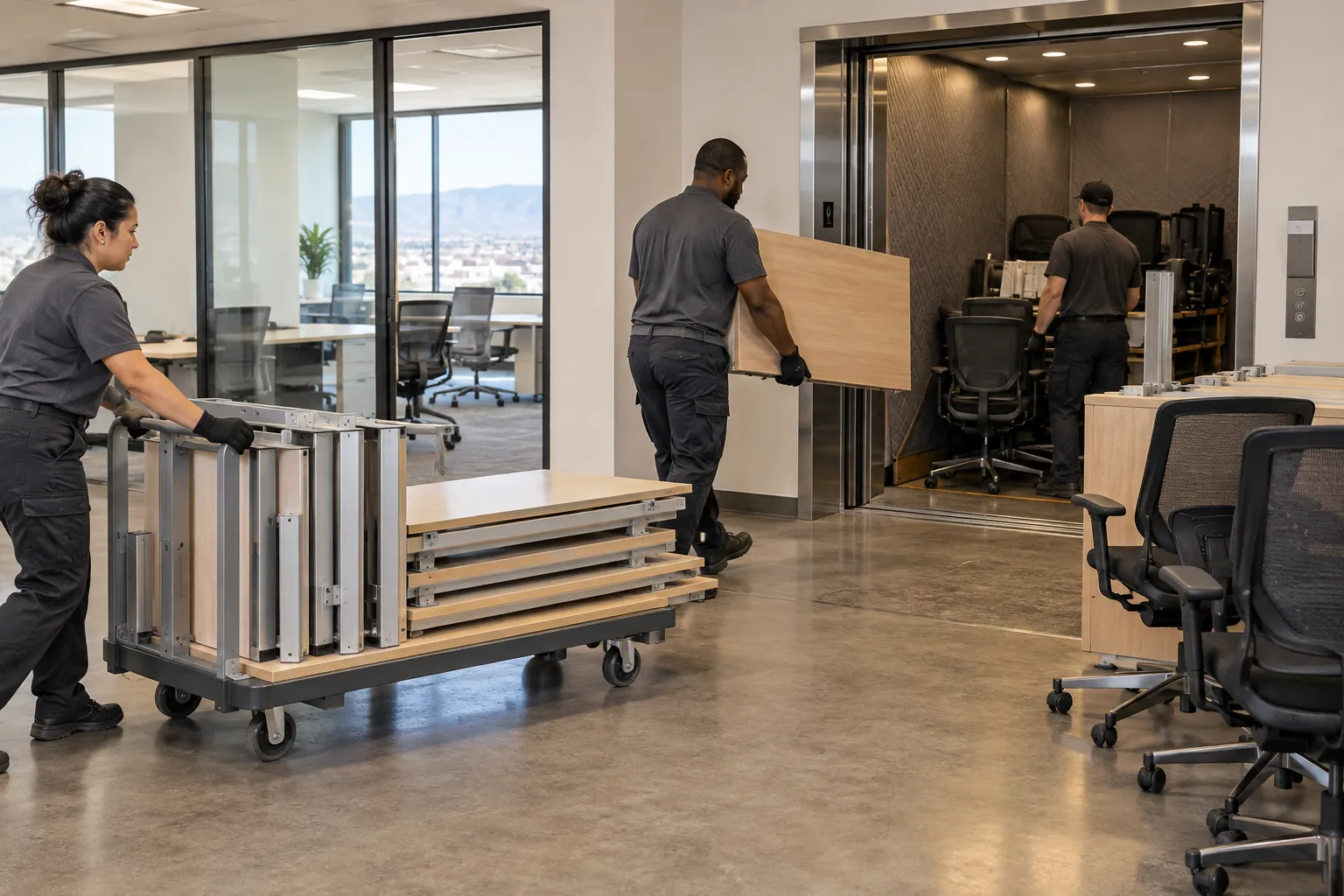
An inventory prevents a small suite from being estimated like a single desk—or a large clear-out from being treated as a quick pickup. Count every desk, return, pedestal, chair, file cabinet, shelf, conference table, and modular panel.
Use one line per repeatable item
| Item | Count | Size or type | Condition / notes |
|---|---|---|---|
| Desk | __ | Standing, L-shape, straight | Assembled or taken down |
| Task chair | __ | Standard or oversized | Rolling / damaged |
| File cabinet | __ | 2-, 4-, or lateral | Must be empty |
| Conference table | __ | Top and base dimensions | Power module or glass |
Confirm the building path
Ask property management about freight elevators, certificates or vendor requirements, loading docks, reserved time windows, door protection, parking, and after-hours access. These are building-specific rules; do not assume one office tower’s process applies to another.
Photos to attach to your inventory
- One view of each furniture group
- The tightest doorway or corridor turn
- Elevator opening and loading-dock path
- Any modular connections or power components
- The final truck loading area
Separate furniture from records and electronics
Empty file cabinets and desks before removal. Handle records, drives, and sensitive equipment under the organization’s own retention and data-security procedures. Furniture removal should not be treated as document destruction or electronics recycling unless those services are separately confirmed.
Need help with the item itself?
Review office furniture removal in Albuquerque, or prepare the details that shape an estimate.